Active Directory Domain Management with Ansible
Lab Guide - Scenario 02: Standardized Consistency (Continued)
1. Introduction
Excellent work on the initial deployment! However, as often happens in IT operations, requirements have evolved. You’ve received an updated ticket that builds upon your existing infrastructure.
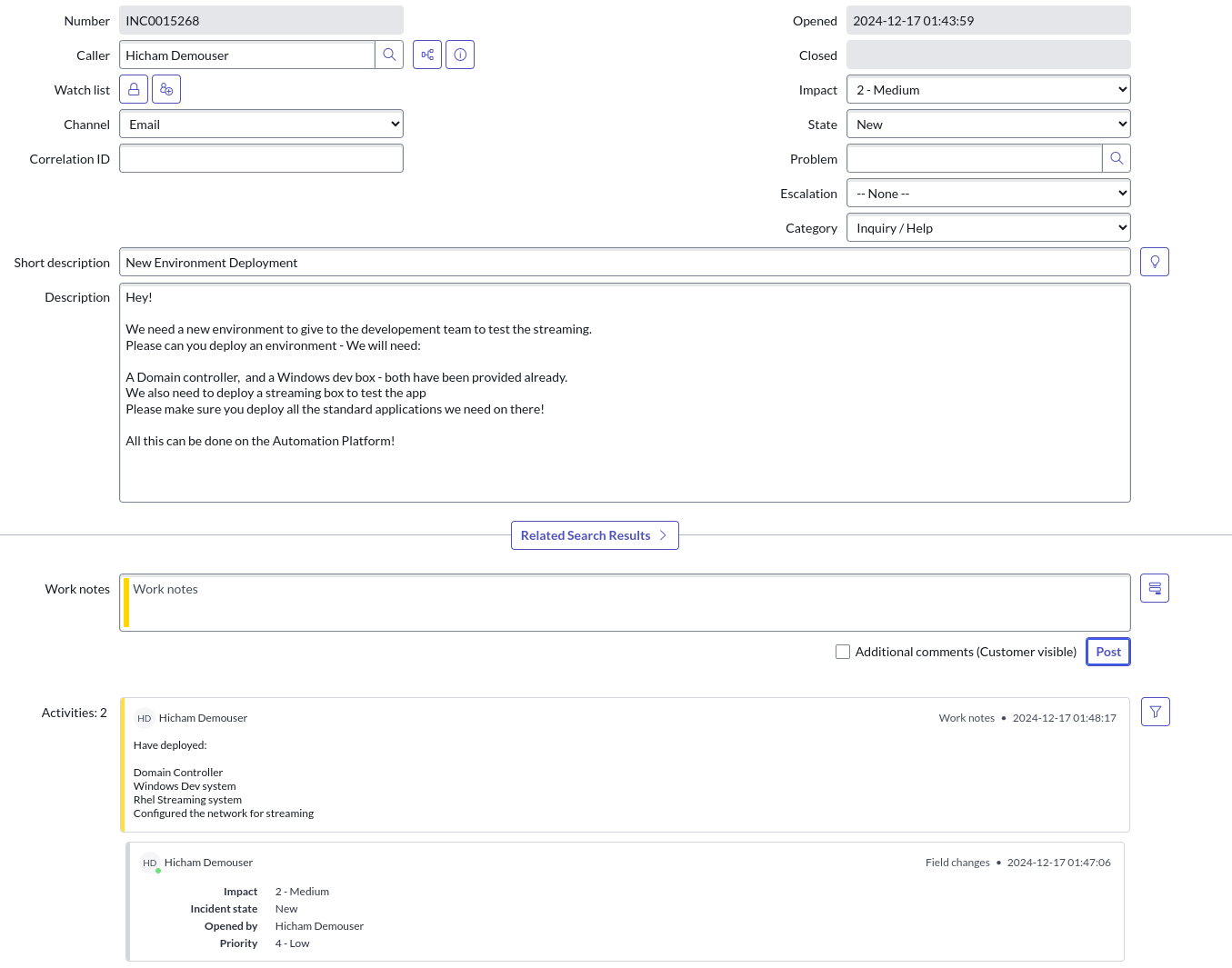
Now that you have a functioning domain, Windows systems, and a new RHEL system deployed, it’s time to complete the environment setup by managing user accounts, organizational units, and domain membership across your hybrid infrastructure.
1.1. Learning Objectives
By the end of this lab, you will be able to:
-
Create and manage Active Directory organizational units and security groups
-
Automate user account creation with appropriate group memberships
-
Join both Windows and Linux systems to Active Directory domains
-
Implement survey-driven automation for dynamic configuration input
2. Lab Environment Setup
Your DNS domain for this lab is: {dns_domain}
|
This lab builds upon the infrastructure deployed in the previous scenario. Ensure your domain controller and initial systems are properly configured before proceeding. |
3. Exercise 1: Creating Organizational Units and User Accounts
Active Directory requires proper organizational structure to manage users and resources effectively. You’ll create the necessary organizational units and groups for your development teams.
3.1. Step 1: Deploy Active Directory Structure
-
Navigate to Automation Execution → Templates
-
Launch the Windows Users and OU template
|
This template may appear on page 2 of your template list, depending on your screen resolution. |
3.2. Step 2: Configure Organizational Details
When prompted, provide the following configuration details:
| Field | Value |
|---|---|
OU |
Testing |
Group |
TMM-Dev |
-
Click Next and Finish to start the job
The automation will create the organizational structure and populate it with the necessary user accounts and groups for your development environment.
3.3. Step 3: Verify Active Directory Configuration
Once the job completes, verify the configuration on your domain controller:
-
Navigate to the Windows tab
-
Click the Start/Windows button
-
Select Windows Administrative Tools → Active Directory Users and Computers
-
Expand the domain structure
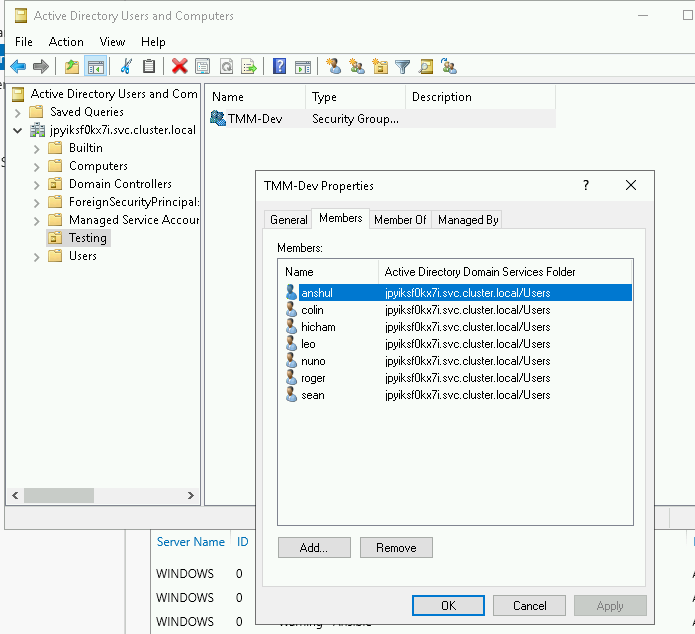
Confirm that the following have been successfully created: * Testing OU (Organizational Unit) * TMM-Dev group * Developer user accounts
4. Exercise 2: Domain Membership Management
With your Active Directory structure in place, you need to join both Windows and Linux systems to the domain for centralized management and authentication.
4.1. Windows Server Domain Join
4.2. RHEL Server Domain Join
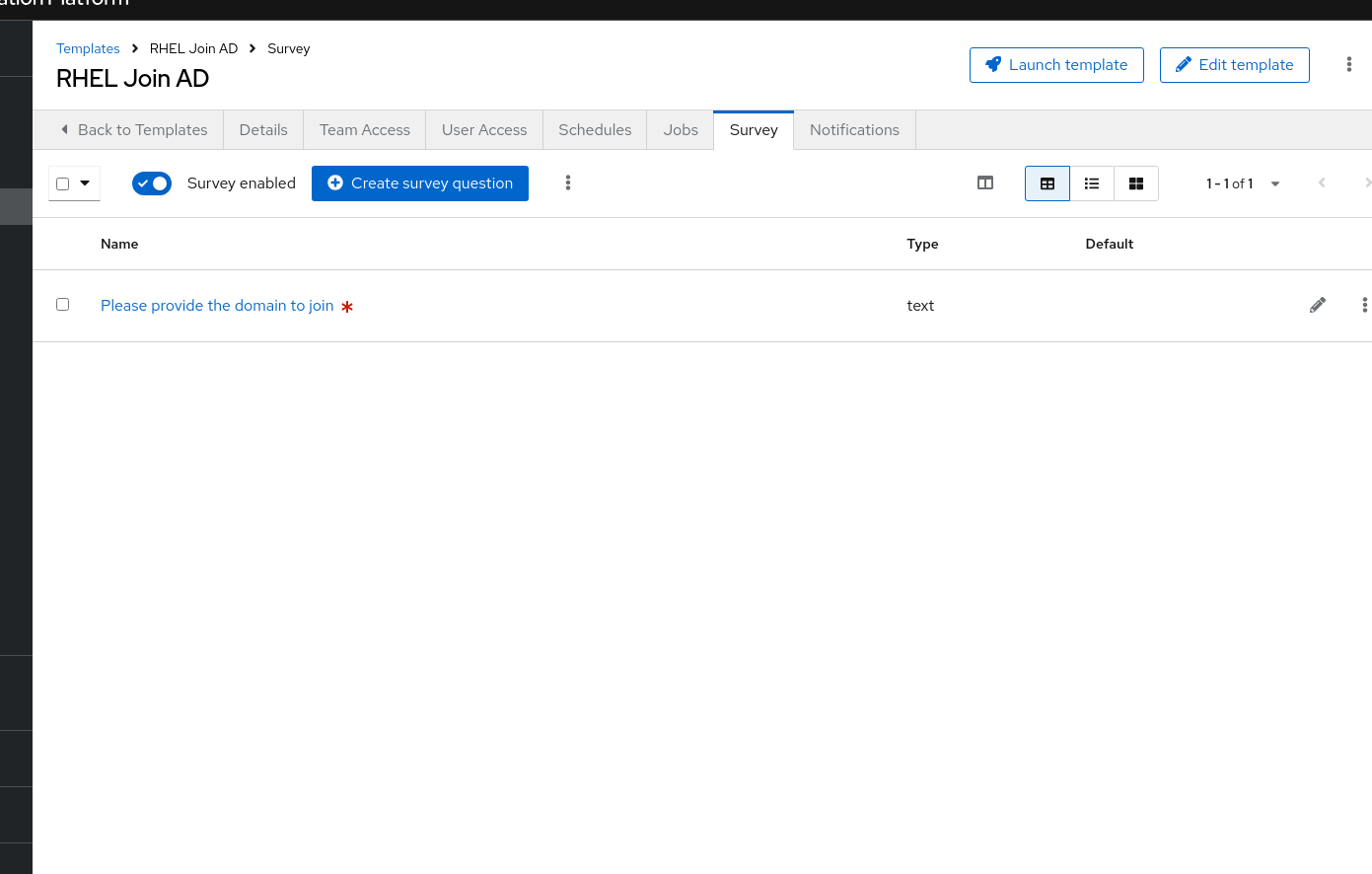
4.2.1. Step 1: Configure Survey for Domain Input
Your RHEL systems also need domain membership, but first you need to create a flexible survey to specify domain information:
-
Navigate to Automation Execution → Templates
-
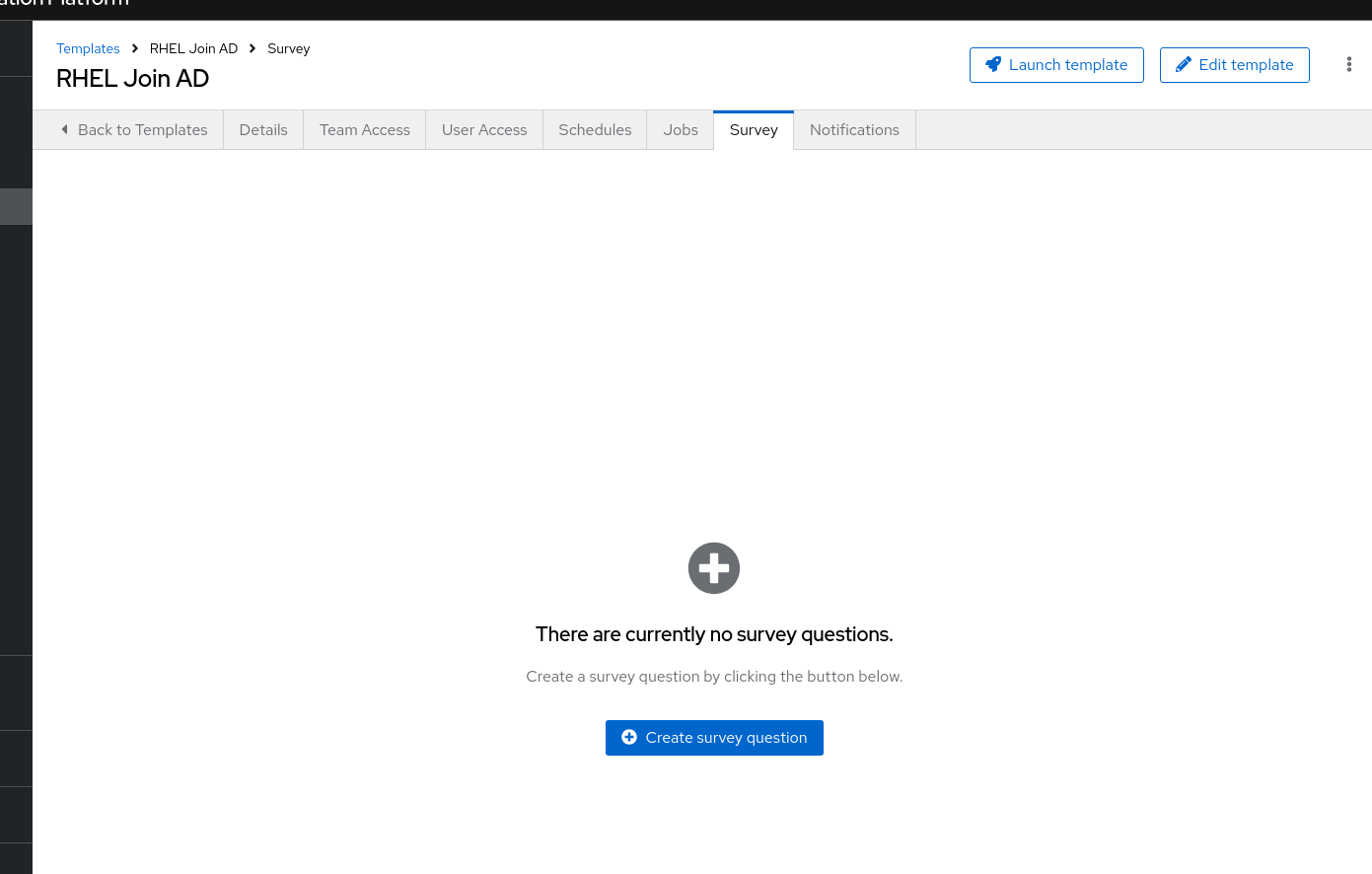
Select the RHEL Join AD template
-
Click on the Survey tab
4.2.2. Step 2: Create Domain Survey Question
-
Click Create survey question
-
Configure the survey with the following details:
Survey Configuration:
| Field | Value |
|---|---|
Question |
Please provide the domain to join |
Description |
Domain/Forest information |
Answer variable name |
domain |
-
Click Create survey question
-
Enable the survey using the toggle
4.2.3. Step 3: Execute RHEL Domain Join
-
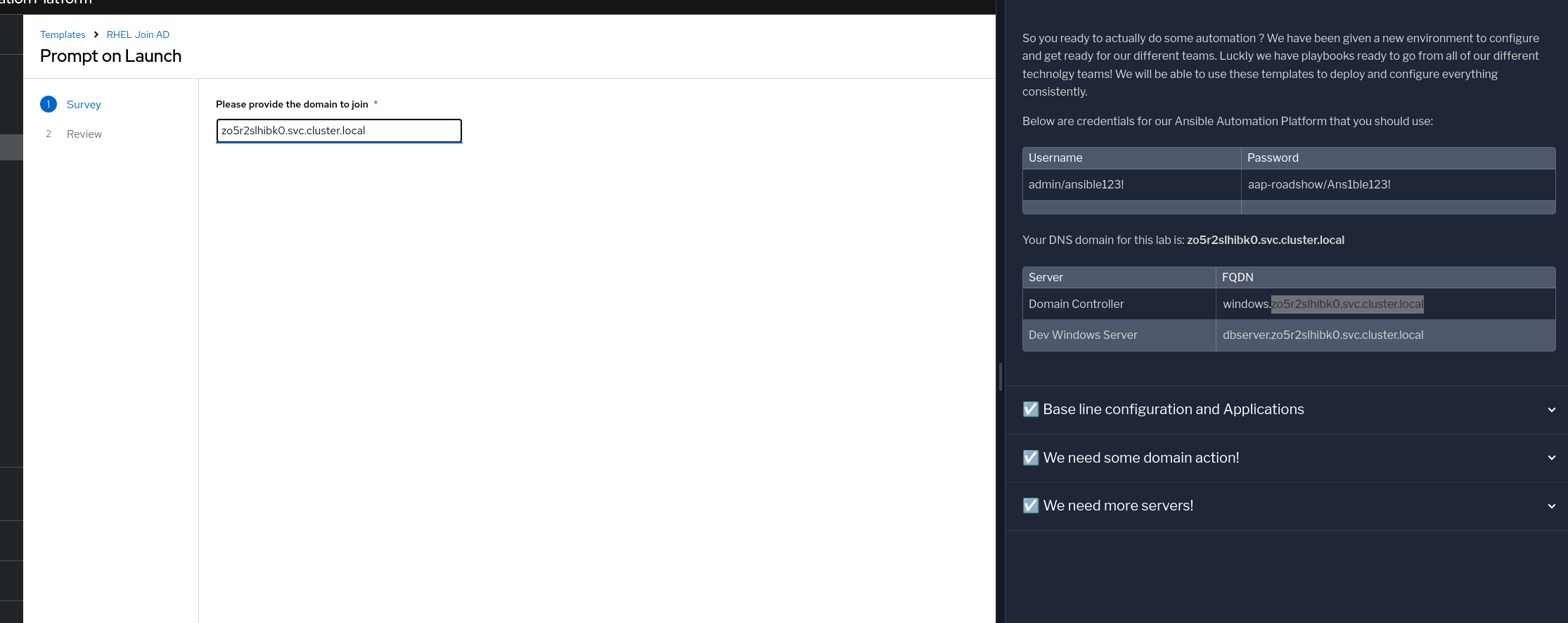
Launch the template
-
When prompted, provide your DNS domain information: {dns_domain}
-
Click Next to proceed
4.2.4. Step 4: Verify Complete Domain Integration
After both Windows and RHEL domain joins complete:
-
Navigate to the Windows tab
-
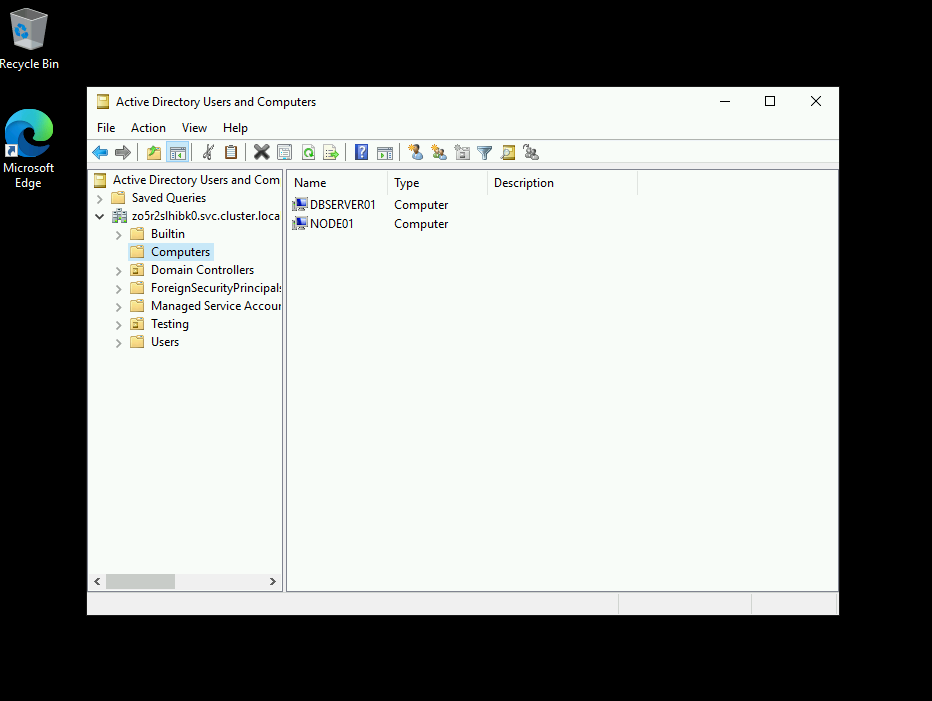
Open Start/Windows → Windows Administrative Tools → Active Directory Users and Computers
-
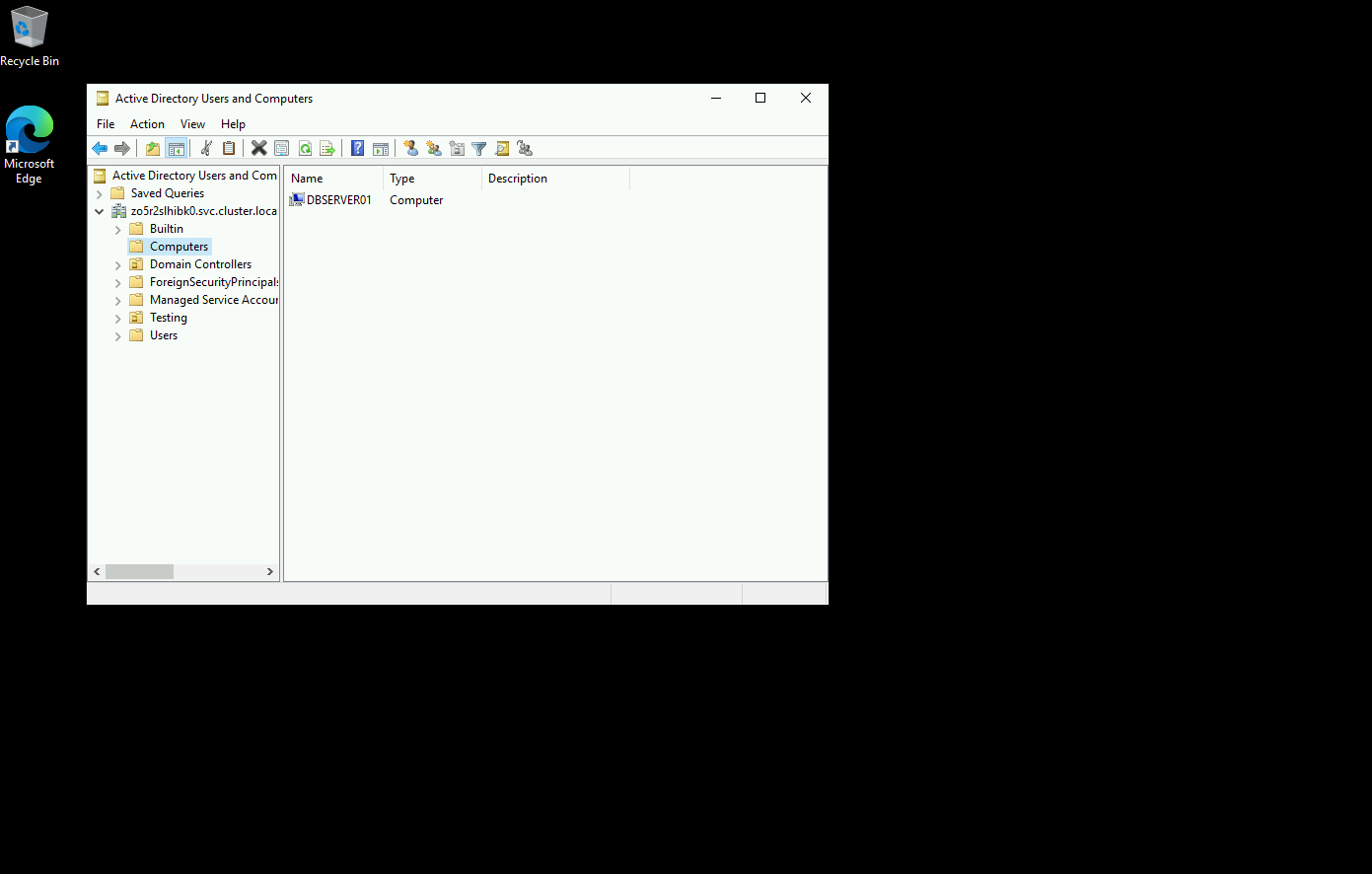
Verify that both systems appear in the domain
|
Having both Windows and RHEL systems in the same domain enables centralized authentication, policy management, and simplified administration across your hybrid infrastructure. |
5. Code Reference
5.1. Active Directory User and Group Management
Here’s the automation code for creating organizational units, groups, and users:
tasks:
  - name: Create a group in an OU
    microsoft.ad.group:
      identity: "{{ group_name }}"
      scope: global
      path: "{{ ou_path }}"
      state: present

  - name: Create users for lab
    microsoft.ad.user:
      identity: "{{ item.key }}"
      password: "{{ user_password }}"
      firstname: "{{ item.value.firstname }}"
      surname: "{{ item.value.surname }}"
      state: present
      groups:
        set:
          - "{{ group_name }}"
          - Domain Users
    loop: "{{ users_list | dict2items }}"

  - name: Create Ansible Admin
    microsoft.ad.user:
      identity: "{{ admin_user }}"
      password: "{{ admin_password }}"
      firstname: "Ansible AD"
      surname: "Administrator"
      state: present
      groups:
        set:
          - Domain Admins
          - Domain Users
5.2. Domain Membership Management
Here’s the code for joining servers to the Active Directory domain:
tasks:
  - name: Join host to Domain
    microsoft.ad.membership:
      dns_domain_name: "{{ wins_domain }}"
      hostname: "{{ inventory_hostname }}"
      domain_admin_user: Administrator
      domain_admin_password: "{{ safe_password }}"
      domain_server: "{{ hostname_cleaned }}"
      state: domain
      reboot: true